



The alchemy is in the calibration.

Why a compass?
Because I know. I lived it. Roadmaps go stale in weeks now. What actually kept me and my teams on course wasn't a better roadmap. It was a place to stand. Something stable enough to make decisions from when everything around us was moving.
What it meant in practice:
We could react to the market without losing our footing. We could change direction quickly without losing the team. We shipped less wasted work — fewer features that sounded good in a meeting and died on the roadmap. We got real value into our users' hands faster, because we weren't spending half our cycles reorienting. It made the noise stop running the team.
That’s what a compass is — calibrated to the right problem, stable enough to hold its shape when everything around it is moving, and pointed where you actually need to go.
But how do we get there?
A compass gets built in layers, from the most stable ground outward. We start there — with the things that don't move at the speed of the market.
We always start with human truth.
How the people you're building for actually think, decide, and behave. The cognitive and behavioral constants that have been true about humans for longer than software has existed, and will keep being true long after the current platform shifts are over. These are your wayfinding points — the fixed reference the compass is calibrated against.
Then we map the standing ground.
The slower-moving truths about your business and your users — the things that change, but not weekly. Your customer's underlying job-to-be-done. The structural realities of your market. The conditions that shape decisions but don't shift with the news cycle.
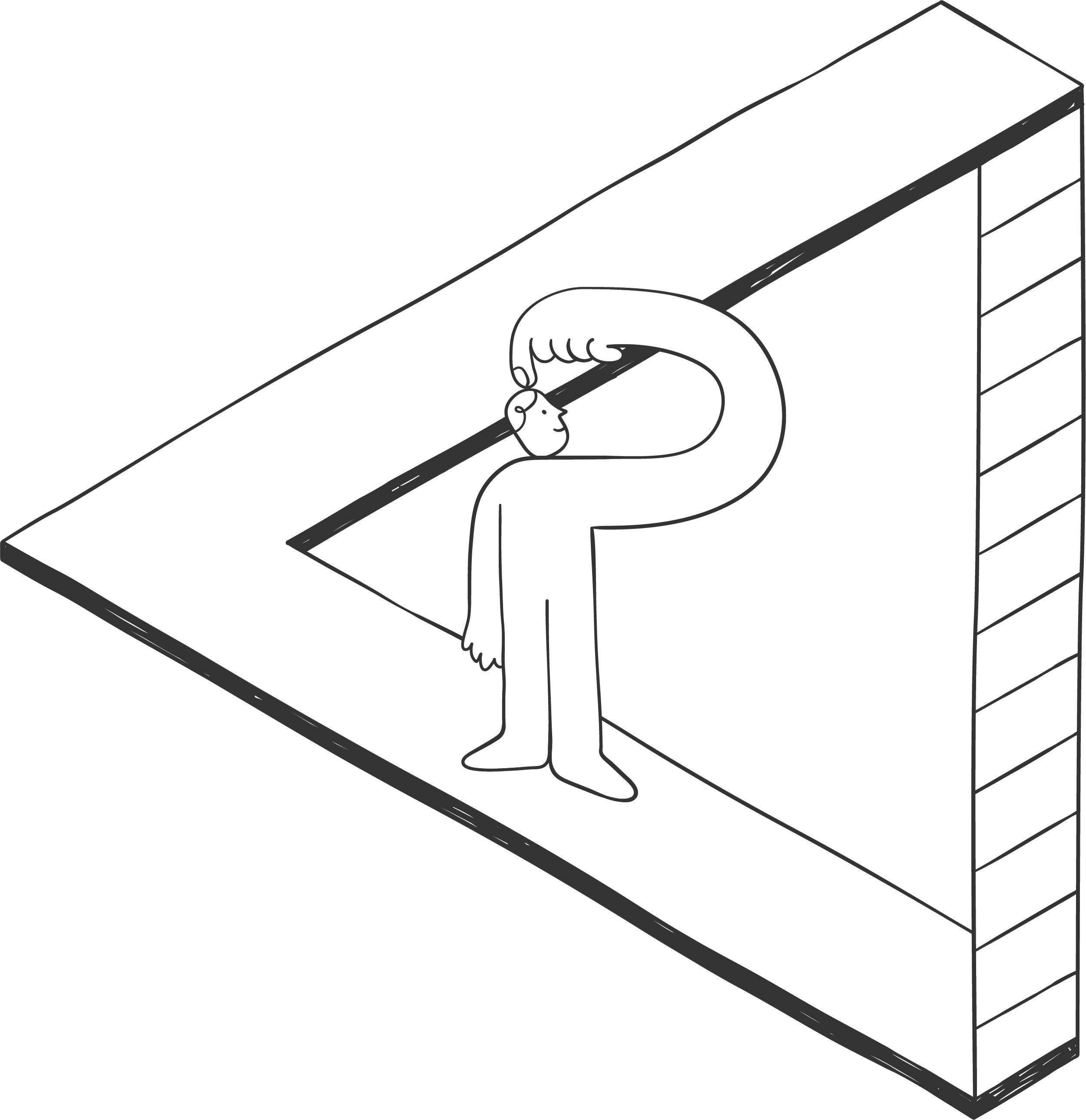
Only then do we read the terrain.
Market conditions, competitive pressure, what AI did this week. The fluid stuff. Important, but useless without something stable to read it against.
From there, true north emerges.
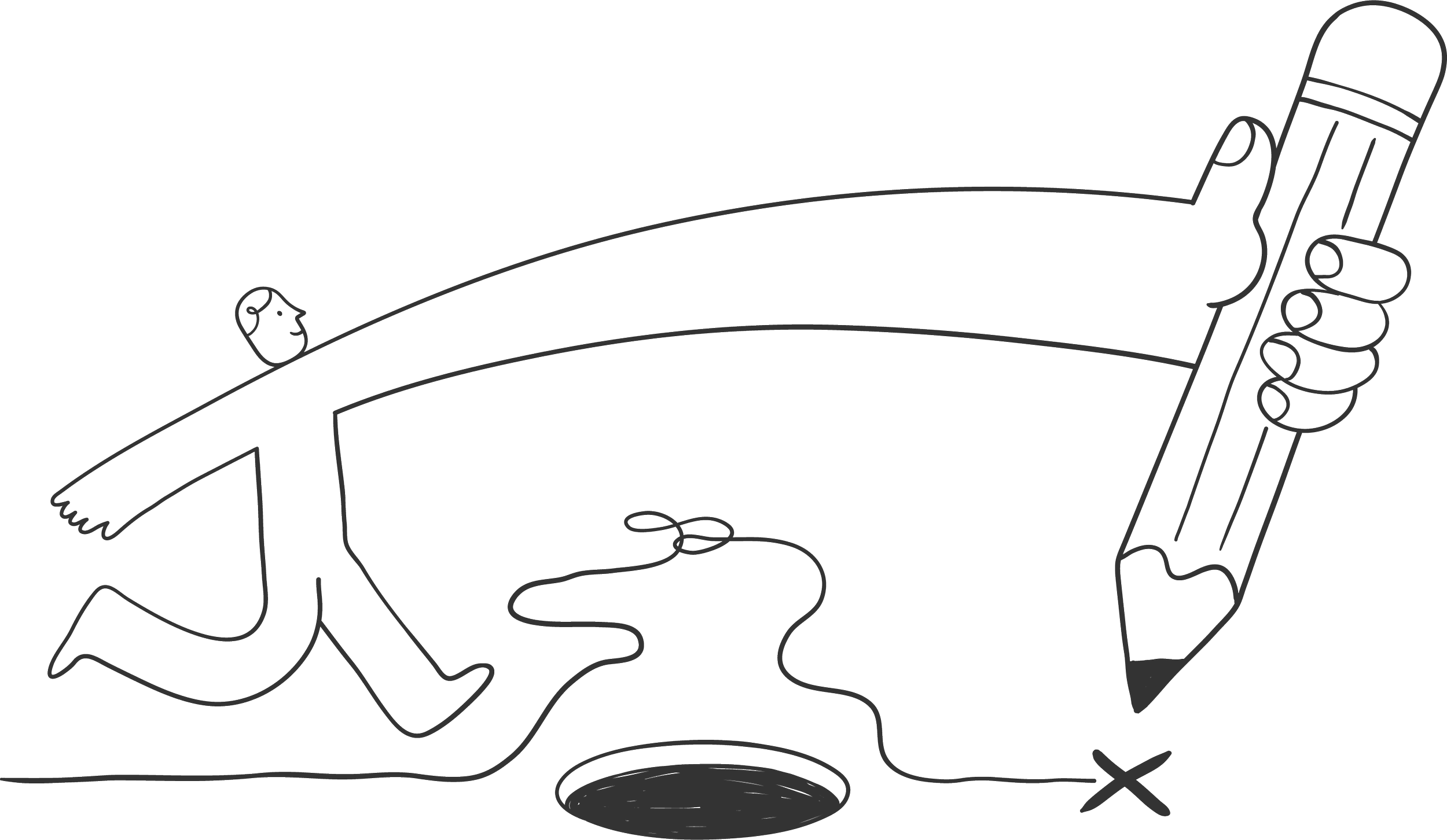
Not assumed, not inherited from last quarter's strategy — derived from what we found in the layer below. This is the part most teams skip, and it's why so many end up solving the wrong problem with real conviction.
A compass built this way doesn't go stale when the terrain shifts. You can move fast without losing the destination.
WHAT YOU ACTUALLY GET:
Coffee rings. Worn edges. Margin notes in three different hands. That’s what The Compass looks like a year in — because it’s a printed, bound book, not a deck or a PDF.
Built to be reached for, not filed. A living tool — built from user truth, behavioral science, market dynamics, and competitive intelligence — that tells you where you are, what your True North actually is, and how to orient every major decision from here, including the ones you can’t see coming yet.
What goes into it:
→ Primary user research and behavioral science synthesis
→ Market dynamics and competitive intelligence
→ True North definition — your mission, central truth, and the right problem statement
→ The opportunity map - what to pursue, what to ignore, and in what order
→ Decision criteria your team can run new questions against as they come up
Good fit if:
→ You're about to make a big bet — new product, new market, new direction — and the cost of being wrong is real.
→ Your team is busy, capable, and quietly unsure whether they're pointed at the right thing.
→ You'd rather spend two months getting the question right than two years executing the wrong answer.
Can’t AI do this now?
Some of it, and I use it where it earns its place. But synthesis was never the hard part. Strategy goes wrong at the inputs — users describe problems they don’t have, research decks get written to survive review, analytics measure whatever was easiest to instrument. Point a model at those and you’ll get a confident, well-organized answer to the wrong question, faster than ever.
Knowing which inputs are lying, and why, is what you’re actually paying for.
Timeline:
~2 months
PUTTING IT TO WORK:
The Compass tells you what’s true.
The Bridge shows you how to act on it.
Some teams walk out of the Compass engagement ready to run with it on their own. Others want me to roll up my sleeves and run the first mile with them — show them how to put the compass to work, build a working prototype to prove it can be done, and leave the team confident enough to run the next mile on their own. That's the Bridge.
I build a lightweight digital prototype — enough to be real, not enough to be expensive — and put it in front of your actual users. Two rounds of interviews. Real reactions.
Then comes the part most engagements skip: I sit with your team and run the Compass against what I heard, live, so you can see exactly how it flexes when real input hits it. That's the moment your team stops watching it work and starts working it themselves.
What goes into it:
→ A working prototype of your Compass in motion — real enough to learn from, fast enough to iterate
→ Two rounds of interviews with your actual target users
→ A live session with your team, running the Compass against what real users told me
→ A clear next-move recommendation — what to carry forward, what to revisit, and where the real leverage is
What you walk away with:
A prototype your team can hit the ground running with — and the confidence that comes from having watched your Compass get used, stress-tested, and adjusted in real conditions.
~1 month
Timeline:
Good fit if:
→ You've completed (or are completing) a Compass engagement.
→ You want to invest in a head start.
→ You want your team to level up during the engagement — not just learn from the output, but build reps while I’m still in the room.
Not ready for a full Compass? Start with Fresh Eyes.
A good place to start when you know something is off but aren’t sure what.
A focused two-week engagement. You give me your existing materials, a few key conversations with the right people, and I give you a candid read on what's working, what isn't, and where to focus next.
No primary research. No production deliverables. Just 20 years of senior product experience pointed at your situation.
Timeline:
~2 weeks
THIS IS ABOUT RELATIONSHIPS, NOT PROJECTS.
Every engagement ends, but the work almost never does.
There are always new questions, new decisions, new moments when it helps to have someone who already knows your Compass in the room. It stays on your desk. You know where to find me.
Need introductions to designers or developers to build what comes next? I've got people I trust and I'll make the warm intros. Hit a decision that needs a sanity check down the road? I’m still around. Something going great and you want to share the win? That's my favorite kind of email.
Because when we're done, we're not actually done. I just move from doing the work with you to being the person you call when you want to make sure the direction still holds. And staying close enough to see you get there.

The right conversation changes everything.
No pitch decks. No pre-packaged proposals. Just a real conversation about what you're working on, what you've tried, and whether I’m the right person to help you figure out what's next. If I’m not, I'll tell you — and point you toward someone who is. The wrong engagement helps no one.
Either way, you'll leave the conversation with a sharper sense of what you're actually trying to solve. That's my whole job — and I take it seriously whether or not it turns into an engagement.